Events

SOCIAL MEDIA

Showing posts with label Author Interview. Show all posts

Monday, 14 May 2018

BLOG TOUR: Q&A with Savita Kalhan, author of The Girl in the Broken Mirror

Hello, fellow bookworms! Today I'm thrilled to be taking part in the blog tour for The Girl in the Broken Mirror with a Q&A from the writer herself, Savita Kalhan!

Hi Katie, thank you so much for inviting me here on your blog today! It’s so exciting having The Girl in the Broken Mirror out in the world – and then taking it on a blog tour with amazing bloggers like you!

Hi, Savita! Can you tell us a little bit about your novel, The Girl in the Broken Mirror?
The Girl in the Broken Mirror is about a Jay, 15 year old British Asian girl, who goes from riches to rags, and from a liberal home to a super-strict traditional Indian home where she struggles to fit in. Then she is brutally assaulted by a relative and her life implodes. It’s a story of love and loss, of a girl and her mother, of guilt, of betrayal, but ultimately it’s a story of hope and where help can be found even in the darkest moments of life.

Jay is such an interesting character who faces a lot of tough situations, what was it that inspired you to write her story?
In many ways, I was like Jay. Without going into details, I faced a few of the tough situations in my life that Jay faces in the book. This was a story that I had never read when I was growing up. I didn’t even know of any British Asian writers, and kids like me never saw ourselves in books. I didn’t know that the struggle I was going through was not unique to me – and I’m not just talking about the culture clash, which is a big enough subject on its own.

There is also that issue of male patriarchy, which exists in many communities, where boys and men are considered to be better than girls and women. Growing up thinking in that way, whether you are a boy or a girl, is not the way forward.

All of these reasons made me want to write Jay’s story for YA readers.

The Girl in the Broken Mirror deals with some very serious topics, what sort of research did you do when preparing to write the story?
Some books require lots of research. This book required very little. I had the background for almost all the story. With the #metoo and #timesup movement, it’s so easy, and horrifying, to find the rape and sexual assault stats. It was really important to me to add the names of all the charities and help lines who can help anyone facing the things that Jay goes through. I don’t want girls going through difficult situations to think they are alone – and it doesn’t matter which community they come from, I’m talking about ALL girls.

Why do think Jay's story needed to be told?
It’s a story that hasn’t been told before. In fact there are very few YA stories that deal with the rape or sexual assault. Anne Cassidy’s No Virgin and Louise O’Neill’s Asking For It are pretty much the only two in UKYA. Speak by Laurie Halse Anderson was the first book I read about rape – it’s an incredibly moving book and I highly recommend it. As for a story with a young British Asian girl as the protagonist, there were none.


What was the most difficult part of the writing process for you, and what was the most rewarding?
The Girl in the Broken Mirror was probably the hardest book I’ve ever written. To write about the themes that are in the book without being graphic, without being sensationalist or insincere, or overly sentimental, was hard. Finding the right title of the story was difficult too – there were several working titles before I found the right one for the book.

The most rewarding part of the writing process was the final edit and the feedback – that was SO incredibly rewarding!

Finally, what do you hope readers will take away from your story?
I hope it helps readers understand the struggle some teens face living with two cultures – one at home and the other outside.

The culture clash struggle is not just confined to Asian kids growing up in two cultures – it’s about all teens facing clashes of conflicting views, ideas, opinions with a different generation. Understanding what it is can help in some way in dealing with it.

I would like boys to read the book too as it’s so important for them to know the boundaries, recognise the consequences, the repercussions and the terrible pain of the trauma someone like Jay goes through.

Ultimately, I want readers to take hope with them at the end of the story. There is always hope.

Thanks so much for having me here, Katie! If your readers want to know anything more about me or The Girl in the Broken Mirror, here’s my website www.savitakalhan.com, or I’m always happy to chat on Twitter @savitakalhan

A huge thank you to the lovely Savita for stopping by! My review of this powerful story will be posted very soon. Be sure to check out the rest of the wonderful blogs taking part in the tour:

Friday, 20 January 2017

BLOG TOUR: Interview with Vic James, author of Gilded Cage

Hello everyone! Today I'm pleased to welcome author Vic James to the blog as part of her tour for Gilded Cage! 

Hi Vic, welcome to The Queen of Teen Fiction! Can you introduce us to your novel, Gilded Cage?
Hi Katie – thanks so much for being a stop on my blog tour! GILDED CAGE is set in an alternate contemporary Britain, ruled by an aristocracy gifted with magical Skill. All the rest of us, without magic, must spend ten years in service to the aristocrats. You get to choose when, and you can try and choose where – in a worktown, or on a grand estate – but you can’t avoid ‘doing your days’.

18-year-old Abi Hadley hopes her family will serve their time lightly on the estate of the powerful Jardines. But when her younger brother Luke is ripped away from them, the siblings are plunged into two worlds of intrigue, power-play, romance and revolution … that may not be as separate as they think.

In the book, people are split between those who have Skill and those who don't. What inspired you to write about this divide?
It’s inspired by the division of our world today – the elite 1% with extreme wealth and power, and the 99% of all the rest of us, who face a struggle simply to get by, find a fulfilling job, own homes, pay for a rewarding education and hold on to our dreams. The lightbulb moment was when I was making a BBC TV series titled The Superrich and Us, when it struck me that the privilege and advantages of the people at the top seems almost … like magic!

How did you come up with the magic system within your story?
I wanted the magic in the world of GILDED CAGE be half-forgotten, almost degraded. People who have incredible wealth often just spend it on ever more pointless things – a ‘super’ car, then a gold-plated supercar, then a gold-plated supercar with a diamond-studded dashboard, when all you really need is something with four wheels that will move you around. In the same way, in the world of GILDED CAGE the aristocrats are using their magic mostly to do mundane things they could achieve other ways: political power, seduction, intimidation, healing.

But it can do so much more than that! The enigmatic ‘young master’ Silyen Jardine is determined to test his Skill to the limits. In the process, he discovers things about it that startle even him. We only start to dig deep into the magical system in book 2, TARNISHED CITY, out in September. Then in book 3 (BRIGHT RUIN, out next summer) we see where it takes Silyen … and not only him!

Gilded Cage switches between several different characters, which POV was your favourite to write from?
I love writing all of them, because I love all my characters (even the unlovable ones!). But I most enjoyed writing Gavar Jardine, the spoiled heir of Britain’s most powerful family, because he’s so obnoxious and oblivious – and yet there’s more to him than he realises.

My favourite chapter of the whole book, though, is from the perspective of a character whose eyes we never look through again – Euterpe Parva, a young aristocrat in a magical coma. I wanted the whole chapter to have a dreamlike quality, and yet it also tells a crucial story from the deep past. I’m always thrilled when people tell me it’s their favourite chapter, too.

What sort of research did you do when preparing to write the story?
No especial research, because in a way I’ve been researching for it my whole life! The alternate Britain diverges 400 years ago, during the English Civil War, and I did a doctorate on that period. All of the bleak details about life during the slavedays were informed by my career as a news journalist reporting on UK social affairs. The grand houses I describe are inspired by stately homes owned by the National Trust which I’ve been visiting since childhood. After all, they do say ‘write what you know’!

What was the most challenging part of writing Gilded Cage?
Bringing together all the different perspectives and plot strands in the concluding chapters! I wanted to give the story a tight, satisfying ending – and yet to make it clear that the overall story-arc of the trilogy has only just begun!

Finally, this is the first book in The Dark Gifts trilogy, how is book two coming along?
Book 2, TARNISHED CITY, is finished and in production with my publishers right now! It’s out in September. (I hate having to wait a year between books in a series, so we’re publishing every 8 months!) I simply adored writing it. The world of the books gets so much larger, and the magic gets so much more … magical! I hope you’ll pick it up!

Thanks so much for stopping by!
I’m thrilled to be here on your blog, Katie! Thank you so much for having me.


Vic James is a current affairs TV director who loves stories in all their forms, and Gilded Cage is her debut novel. She as twice judged the Guardian’s Not the Booker Prize, has made films for BBC1, BBC2, and Channel 4 News, and is a huge Wattpadd.com success story. Under its previous title, Slavedays, her book was read online over a third of a million times in first draft. And it went on to win Wattpad’s ‘Talk of the Town’ award in 2015 – on a site showcasing 200 million stories. Vic James lives and works in London. 


Gilded Cgae is out in eBook now, and paperback on January 26th. Don't forget to check out the rest of the stops on the tour! 


Friday, 14 October 2016

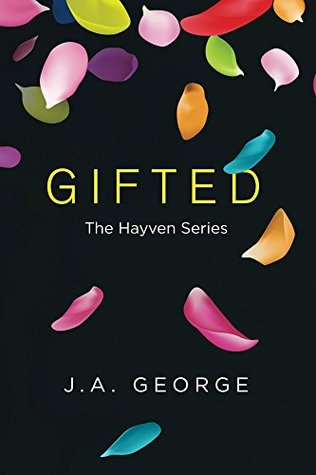
INTERVIEW: J. A. George, Author of 'Gifted'

Today I'm pleased to welcome J. A. George to the blog to talk about her book, Gifted
 
Hi Jessica! Can you tell us a little bit about your novel,Gifted? 
Hi Katie! I sure can! Gifted is about a nineteen year old university student (Ava) who meets a silver-haired woman a little on the strange side before meeting a young man a little more on the stranger side. These meetings lead to the eventual discovery of Hayven – a city separated from the rest of the world where only those with gifts can go. She makes an eclectic bunch of friends and finds herself very happy in the golden city, but Hayven has its dark side and they’re called Cliders. Gifters turned rogue, Cliders are determined to see Hayven return to the way it was a thousand years ago when the city was under the dominion of Madrina. 

Gifted is a contemporary YA fantasy, but it’s a little different from what may be expected from YA fantasy novels at the moment. There is no instant-love, a chosen one or a fearless girl growing up in a dystopian society. My protagonist is as normal as they come! Ava is strong-willed, funny and sarcastic, but she’s also insecure and worries about the small stuff, like we all do. She’s not skinny and she’s not boys-line-up-at-my-door beautiful. She is wonderful though because I can see myself and many others in her and it’s nice to have a relatable character who experiences extra-ordinary things. 

Gifted also takes a look at real young adult relationships, friendships and modern-day topics such as, body weight issues and cheating in relationships. My series also plans to pack in a lot of diversity and so far I’ve plotted story-lines and roles for Asian characters, Muslim characters, Latin characters and homosexual characters. 

*deep breath!* So…yeah. Gifted is a little different, but I hope that’s more of a good thing than a bad thing. 

What was it that inspired you to write this story? 
I wanted to read it! I love reading YA fantasy, but I soon started craving something different. In fear of repeating myself, I’ll just say I wrote Gifted because I wanted to read a book series with relatable characters, no instant-love or chosen one and a lot of diversity. 

What were the most challenging aspects of the writing process for you, and what were the most rewarding? 
The most challenging for me was making sure I didn’t write for the book market. This edition of Gifted is my second and edition one is an example of me writing for the book market. There was instant-love, a strong love triangle etc. because I assumed that was what YA readers wanted. But because it wasn’t what I wanted to read, I hated reading it! Two years later I realised I can’t be an author who hates her own book! So I redrafted 95% of Gifted and out came edition two. 
The most rewarding is having readers say they enjoyed reading Gifted and can’t wait for the second one. For an author, I don’t think it gets much better than that. 

Giftedis the first book inThe Hayven Series, how is the second book coming along? 
It’s coming along well! I had planned to release book two in 2017 because I didn’t expect to hear so many ‘when is the next book out?!’ So I started working on it straight away. I’m refusing to rush it because that’s just asking for mistakes, but now the publication date will be the end of 2016. And I honestly cannot wait for those who have read the first book to read the second one! 

Did you relate to any of your characters at all? 
Pretty much all of them! I tried to make my characters as relatable as possible, the only un-relatable part being their gifts. Even my antagonist is a little relatable because I didn’t want to write about a senseless murderer. Madrina is…mentally unstable, but she’s very aware of it and everything she does, she can justify. You won’t always agree with her and sometimes, scarily enough, you will, but at the end of the day, she can tell you why she did what she did. 

What do you hope readers will take away from your story? 
I hope readers will subconsciously take away the fact that they don’t have to be supernatural to be extra-ordinary. 

Finally, the main character of your story, Avery, is nineteen. What were some of your favourite books to read at that age? 
Hmmm… Let me think. I was in university at 19 and you get a lot of books to read on an English Literature course so unfortunately I technically didn’t have spare time for extra reading! I did sneak a few books in and I think the one I remember was the Divergent series by Veronica Roth. I’ve recently stepped out of the YA genre to explore other genres and I’ve found some amazing books, like The Miniaturist by Jessie Burton and A Thousand Splendid Suns by Khaleed Hosseini. I’ll read whatever sounds good. 

Goodreads: https://www.goodreads.com/book/show/29915954-gifted  

Huge thank you to Jessica for stopping by!

Sunday, 11 September 2016

SUPER AWKWARD BLOG TOUR: Q&A with Beth Garrod

Today is the final stop on the blog tour for Super Awkward, the hilarious new novel by Beth Garrod! I'm please to share with you all this Q&A with the lady herself.

1. Hi Beth, welcome to The Queen of Teen Fiction! Can you tell us a little bit about your novel, Super Awkward?
Of course! Thanks for asking me. Ok, Super Awkward. It’s about a fifteen year old girl, called Bella Fisher (Fishy Balls, to her ex) and her quest to have just one day pass by without doing something so mortifying she Googles, ‘how much food would I need to buy to officially become a hermit’. It’s a book that’s about friendships, boys – specifically the hottest boy in the world, NO BIG DEAL – and worrying that everyone else has it all figured out. Oh, and there are a lot of crisps in it. And Dairy Milk with Daim.

2. What was it that inspired you to write the story?
I guess I wasn’t inspired as such, it was just getting the chance to write similar sort of stuff as a job (AKA THE DREAM JOB) when I started off at the BBC in Science, and realised I could swap writing about planets, for popstars and periods. Sometimes even popstars having periods. And once I started, I fell in love, and as my job changed it was the thing I carried on doing as a hobby. I have also spoken to some many young people who feel as if they’re the only ones who feel like they don’t fit in, or are worrying about weird stuff – so if just one person feels a bit happier at the end of a day, or realises that, like Bella, it’s totally normal to not have stuff figured out, I will die happy (ARGH, I’M PROBABLY NOT MEANT TO WRITE ABOUT DEATH WHEN TALKING ABOUT A BOOK ABOUT SNOGGING, I’M REALLY SORRY).

3. Tell us about your main character, Bella! What do you think readers will love about her?
Bella. Hmmm. Well, what I hope readers will love about her, is that she’s constantly trying to get stuff right, which only makes her get it all more wrong. And, in life, I know I much prefer people with good intentions that those with good life skills. I also hope they also love her dog, as she was based on my very own dog when I was a teenager (RIP Mumbles) (ARRRRGHHHHH, I’M TALKING ABOUT DEATH AGAIN).

4. What was the most challenging part of the writing process for you?
Not writing about death all the time cos I’m clearly obsessed with it.
NO. Obvs that was a joke.
I’m really disorganised, and don’t plan anything, so for me the hardest parts were trying to make things happen in the right place.
I also cringe at writing kissing stuff (lucky Bella isn’t exactly a snogging lothario, or I’d be in trouble), and I don’t enjoy the bits where stuff isn’t working out. SPOILER – THINGS DON’T ALWAYS WORK OUT. (But mainly they do). (But sometimes they don’t).

5. Do you have a favourite writing place?
No – I’m so lazy, that wherever I’m sitting down is my favourite place. And you mainly have to be sitting down to write, as it’s a real trip hazard if you’re trying to walk and type on a laptop. Although, it is extra lovely to be able to see nice things out of the window, and one weekend by the sea in a little village in Cornwall was probably my absolute favourite. Don’t know how much writing I got done though, as I was too busy trying to look intelligent, and literary, while gazing out of the window.

6. What made you want to write for a YA audience?
Guess that comes back to question two. Because it’s the audience that I think is funniest, and most interesting. And YA books are my favourite. You’ve got to write something that you’d want to read, as you’re going to read it more than anything else in your whole life (other than adverts on the tube).

7. What were your own favourite books to read as a teenager?
Anything by Judy Blume. Anything with a horse in it. If Judy Blume had written about horses falling in love, I would have been in heaven. I also got really into my parents’ murder mystery books (BACK ON THE DEATH THING AGAIN). And Diana Wynne Jones was incredible. I think variety is an amazing thing.

8. Finally, what have been your own super awkward moments?
How long have you got?
I’m also really happy you haven’t added ‘as a teenager’ as I’m still racking them up now. Obvs I’m going to pretend the ones in the book are totally fictional, and I definitely didn’t text a boy a liked with a message meant for my friend, describing said boy as ‘world’s fittest man’. (If he’s reading this now, I would like to claim in my defence, that it was just extra early research for my book, not actually a mortifying mistake). A couple of weeks ago I stayed in a posh hotel – after a mini-camping trip. While one of the staff was giving me side-eye, I tried to wiggle something out of my suitcase, but accidently flicked a slug on the wall. It must have been wanting to swap campsite life, for a turndown service. Or there’s the time I knocked myself out walking into a wall (I got two weeks off school – actually quite a result). Or had someone (an actual stranger) on a packed tube point out I’d got my top on inside out. Or the time I accidentally threw three tampons out of my bag and into the lap of an old man. The list is too endless. Which is why it’s never fun taking life too seriously. As you’re only ever a second away from choking on a Pringle.

Huge thank you to Beth for the awesome answers! Super Awkward is available to buy now, and you can read my thoughts here. If you've missed any of the stops of the tour, but sure to check out the blogs that have taken part!

Tuesday, 29 March 2016

INTERVIEW: Christi J. Whitney

Hey, everyone! Today I'm excited to share with you all this awesome interview with Christi J. Whitney, author of The Romany Outcasts series!


Hi Christi! Can you tell us a little bit about your YA series, The Romany Outcasts?
I’d love to! The Romany Outcasts is a fantasy / urban fantasy series published by HarperCollins/HarperVoyagerUK.

Sebastian Grey thought he was a normal teenager – until Romany Gypsies arrive in town. Suddenly, he finds himself drawn into a world of secrets, shadowy creatures, and a destiny he cannot escape.

What was the inspiration behind the series? 
Well, my inspiration came from several places, actually. I’ve always been fond of fairy tales, and my favorite is Beauty and the Beast. I liked the idea of taking some of those themes and weaving them into my story. My second inspiration came from the type of characters I fall in love with in books and films – in particular, the atypical, underdog hero. I’ve always been more drawn to the slightly offbeat sidekick character with a loyal personality and a good heart. And my third inspiration came from my former students.

What sort of research did you do whilst writing book one, GREY?
I delved into the culture of the Romani people all over the world while working on my book. I wanted to create my own, fictional group of Roma, loosely based on American Gypsies we see here in the Southern US. I wanted the freedom to write characters that could be unique and not bound by the real world, but I also wanted to be respectful to the rich heritage of the Roma.

Which of your characters do you relate to the most?
Oh, hands down, I relate to Sebastian the most. I totally get his awkward moments, his humor, and his struggles with his own insecurities. A good bit of YA is written from the female character’s perspective; so writing for Sebastian was a fantastic experience for me. It was so much fun, writing from his point of view and seeing things through his eyes.

Why did you decide to write for a YA audience?
It wasn’t really an active decision for me to write young adult fiction. It just felt natural. I was a high school teacher for many years, and I spent far more time with teenagers than I did anyone else. Plus, there’s just something completely unique about YA that we can all relate to, no matter what age we are.

The second book in the series, SHADOW, is releasing later this year. Can you give us any hints as to what to expect?
Absolutely! I just turned in my structural edits for SHADOW to my editor, so everything’s starting to feel real. SHADOW comes out the 2nd of June – first as a digital release, and then followed by a print run a bit later.

SHADOW continues Sebastian and Josephine’s story, picking up just a few months after the end of GREY. Without giving too much away for those that haven’t read the first book yet…SHADOW takes place in the Circe de Romany. Dangerous creatures have threatened the clan, and Sebastian’s decision to help will take him down a terrifying path of transformation and discovery.

What do you hope readers will take away from your work?
I write fantasy for the same reason that I read it: I like to be taken away from my normal, everyday life for a little while. I hope readers will enjoy this journey and fall in love with these characters as I have.

Finally, what were your favourite books as a teen?
Well, I’m a total geek, so science fiction and fantasy books are always at the top of my list. As a teen, I read a lot of J.R.R. Tolkien and C.S. Lewis. I was also pretty addicted to the Dragonlance Chronicles and the Shannara series. (I was so thrilled when I found out they were making the Elfstones of Shannara into a television show). But, aside from fantasy, I also really loved classic literature as a teenager. Sense and Sensibility, Pride and Prejudice, and the short stories of Edgar Allan Poe were favorites of mine.

Huge thank you to Christi for stopping by! You can discover more about her exciting series over on her website

Social Media Links for Christi J. Whitney:
Twitter: ChristiWhitney
Instagram: christijwhitney

Book links for GREY:
AmazonUK –
http://www.amazon.co.uk/Grey-Romany-Outcasts-Series-Book-ebook/dp/B00MT9E66E

Waterstones –
https://www.waterstones.com/ebook/grey-the-romany-outcasts-series-book-1/christi-j-whitney/9780008113582
https://www.waterstones.com/book/grey/christi-j-whitney/9780008120450

HarperCollinsUK -
https://www.harpercollins.co.uk/9780008120450/grey
 

Saturday, 30 January 2016

INTERVIEW: Linda Bloodworth

Hey there, book lovers. Today I'm excited to share with you an interview with Linda Bloodworth, author of YA fantasy story A Raven's Touch. Enjoy!


Hi Linda! What was it that inspired you to write the story?
I actually had a dream and then when I woke up I scrambled to write everything down. Mind you, I had this dream when I was 14, so things have changed now that I’m in my 30’s. Originally, I wrote A Raven’s Touch from the ages of 14 - 18, and let the manuscript sit in my drawer for a very long time. Three and a half years ago I started fresh and completely re-invented the story only keeping the title and my main character’s name. 

What made you want to write for a YA audience?
I never really think of myself as a particular genre writer, I just write the story that’s in me, and this is how people have categorized my work. When I’m finished writing about Justice and her friends I may may dabble in the contemporary area, I’m not really sure. I had a line come to me and it was so very different than what I currently write. I’d like to explore it and not be bogged down by genres. 

Tell us a little bit about the research you had to do in order to write A Raven’s Touch?
The first time I wrote A Raven’s Touch I spent four months in the library (before the internet was really big), and read everything I could about vampires. I read the vampire bible, yes, there is one, and learned a great deal about the many different folk lore stories around the world. I also read everything I could get my hands on about nephilim. Did you know there’s a particular powder that kills them? Neither did I, but I do now!

Which character from your story was the most fun to write about?
I loved writing Justice and Moira. They have such a strong friendship, and their scenes together always made me happy. I based Moira on my best friend and it really almost wrote itself as I pictured what she’d say to each situation. 

This is your debut novel, what were the best and worst parts of the process for you?
The best part was writing the first draft. It all came rushing out and some nights I felt like I was on fire! The scenes played out in my head so quickly, I barely had time to type, I let it flow like a river. The worst part was the editing. When I received feedback from beta readers and I realized I had to change scenes. I did three major re-writes to the point of almost re-writing half of the book. Considering it was 120,000 characters, I really had a lot of scenes that I cut out, and I’ve kept those for my newsletter fans as special features.

Finally, what authors and stories have inspired you in your writing?
For sure Stephen King because he scares me. I admire his ability to find the crevices of my childhood and sneak past into the heart of my fears. Sailor Moon has been a huge inspiration, and fans will recognize a few similarities between Justice’s powers and Sailor Mars. When I was writing, I saw natural place where the things I love could fit. For example, I love X-Men, X-Files, and Doctor Who. I managed to sneak all three into the story line. It just rather happened. Along with those stories, I also wove in multiple song lyrics as every day conversation. If someone can spot all the songs I will personally send them a bookmark.  

Thank you to Linda for stopping by! A Raven's Touch is available to purchase now:
Google Play: http://bit.ly/1OdJQtw

Monday, 20 April 2015

INTERVIEW: Jo Ramsey

I'm excited to share with you this awesome interview with author Jo Ramsey!

What made you want to write for a YA audience?
I've been writing stories for and about teenagers since I was one. About 30 years now. I sometimes say I never really outgrew my own teen years, and some of my stories are written to give myself a do-over on things that happened when I was in high school.

I've also worked with teenagers as a teacher or teacher's aide, and I've known many who were discouraged, or who were making poor choices because they didn't know any other choices to make. I met a lot of teens who didn't believe in themselves, but encouragement and support went a long way. I write for the teens who wonder if they're "okay", or who think they aren't anything special, or who don't believe they'll ever do anything important. That's why my tagline is "Anyone can be a hero."

What were some of your own favourite stories to read as a teenager?
As a teen, I was really into fantasy. Susan Cooper and Madeleine L'Engle were two of my favorite authors. Pretty much anything that involved a "normal" teen being pulled into a fantastic world where they were able to save people/the universe/whatever, I would read and love.

Where do you find inspiration for the stories you write?
All over the place. My kids are teenagers right now (though the older one disputes that, since she'll be 20 this summer), and they and their friends have inspired a lot of my recent projects. Some of my older, now out-of-print, books were inspired by my own experiences as a teen.

Have you ever related to any of the characters in your books?
Very much so. My Reality Shift series (which is unfortunately among the books that are now out of print) was somewhat autobiographical, in that many of Shanna Bailey's experiences, fears, and other issues were mine, either when I was a teen or when I was an adult. I took some of my adult experiences, including my journey of healing and recovery from abuse, and aged them down to reach teenagers.

What have been the best and worst parts of the writing process for you?
The best part is seeing the finished product available to readers. The worst part is revising my first draft. Though sometimes writing the first draft isn't completely fun...I love having written, but actually writing isn't always the best.

What advice would you give to aspiring writers out there?
Write for yourself above all. If you write a story you aren't really interested in because you think other people will read it, they won't read it, because your lack of interest will show in the writing. Write what calls to YOU.

Which novel are you working on at the moment?
I just submitted the fifth novel in my Deep Secrets and Hope series, so I'm taking a bit of a break before I start writing anything else.

Thanks to Jo for taking the time to answer these questions! Be sure to read more about her stories on her website, and you check out her twitter page here.


Saturday, 11 April 2015

INTERVIEW: Jennie Wood

I'm excited to share with you this awesome interview with Jennie Wood, author of A Boy Like Me

Hi, Jennie! Your novel was touching to read.
JW: Thank you so much!

What was it that made you want to tell Peyton’s story?
JW: When I began working on A Boy Like Me, I was taking a break from writing Flutter, which is a graphic novel series about a girl who shape-shifts into a boy to get the girl. Minus the sci-fi shape-shifting element, Flutter is a story very close to my own. Growing up in a small, conservative town, I spent a lot of time imagining what my life would be like as a boy. I’d watch my guy friends and male cousins take girls on dates to the movie theater. A girl taking a girl to the movies just didn’t happen in my town and I wasn’t even out yet, not even to myself. At that point, my mind just didn’t allow itself to go there so I just imagined my life as a boy and that became the basis for Flutter.

While taking a break from Flutter, I wanted to spend some time with a story that was different from my own experience. Instead of a girl imagining life as a boy, I wanted to write from the point of view of a guy who had been assigned the wrong gender at birth. I wanted to spend some time with a guy who saw the world in very black and white terms because that’s the view, the world he’s raised in, but his own personal situation forces him beyond that mindset.  

What sort of research went into writing the book?
JW: The subject matter is something that’s extremely important to me so I did a ton of research before I began the first draft. I spent a lot of time reading nonfiction, especially first hand accounts, interviews, and anthologies. One major source was Aaron Devor’s FTM: Female-to-Male Transsexuals in Society, which I reference directly in the novel. I also talked to transgender individuals directly. What I realized pretty quickly was that while some situations, feelings, and experiences were similar, everyone had their own individual way of accepting, embracing, and becoming who they were. It was very important to me to not write an issue book, to not write a character attempting to represent one definitive experience.

While writing the novel, I focused on giving Peyton his own individual experience. His behavior and his inability to express himself reflected the world he was raised in. His confusion comes from a lack of language and communication skills.

When working on final revisions, I asked Tate Fox to be the novel’s content consultant. Tate was just a little older than Peyton is in the novel and had some similar experiences. Tate gave me feedback on language, situations, reactions, and dialogue for the entire book. 

What was it that made you write for a YA audience?
JW:  A Boy Like Me being a YA novel was a happy accident. I didn’t set out to write it as YA. The first draft spanned 30 years of Peyton’s life. But the more drafts I did, I realized the most important part of Peyton’s story was around the moment when he embraces who he is and the events leading up to that moment.

For example, whatever medical interventions he decides to do - or not do - later on is less important. Because Peyton’s a teenager when he begins to realize and accept who he is, that makes it a YA novel. I’m happy that A Boy Like Me turned out to be YA. Some of my all-time favorite books are. The journey I had writing this book is an example of what happens when writers get out of the way and let the story go where it wants to go.

Did you relate to any of your characters at all?
JW: Great question! Both Peyton and Tara find solace and a way to communicate through music, which I can relate to a lot. Writing songs, playing guitar, and music in general definitely helped me get through high school and beyond. Being in bands and working in recording studios – there have been times when a recording studio has been a refuge for me.

I didn’t think about that at the time I was writing the recording studio scenes with Peyton and Tara. But afterwards, looking back, I realized they were able to express themselves there because they felt safe, which was a feeling I’ve always had in a recording studio.

Also, the way Peyton sees the world - things are all black or all white, things are either masculine or feminine, for girls or for boys - that way of looking at things is something I grew up with, too. It took me a while to see beyond it and embrace all the wonderful grey areas in life, the areas that Tara so clearly sees at a young age. Tara sees those grey areas because she’s had more exposure and experiences than Peyton.

Did you learn anything new about yourself throughout the writing
process?
JW: Another great question! I learned that I could write a novel. I learned that I am capable of patience and perseverance. I learned that I could be patience not only with the process of writing a novel and with myself during that process, but also with the people I worked with, especially the two amazing editors of A Boy Like Me, Kelly Ford and Mike Perkins.

Whenever I thought to myself – I can’t look at this book one more time, I can’t do one more revision, I can’t revise one more scene – I did. At one point, in final revisions, Kelly suggested I add some new scenes with Peyton and his mother. I wanted to scream “No! No more!”

Because with new scenes comes more revisions, more edits, more back and forth. But I added those scenes and the book is better for it. I may have wanted to scream no, but I never said no to more work, to more revision on this book.

What do you hope readers will take away from this story?
JW: Peyton’s story is bittersweet. It’s not all rosy. Not everyone accepts him. Not everyone gets it. And that felt true to me. But I hope that readers come away from Peyton’s story with the feeling that the struggle, hard work, and courage it takes to truly know each other and ourselves is worth it. That there is some happiness on the other side of that intense struggle to know and embrace who we are.

There will be a lot of young people who can relate to Peyton’s story; do you have any advice for readers going through similar situations?
JW: Advice is tricky because while some aspects of a situation can be similar, other aspects can be different. In most cases, what a person needs in these situations is not someone to give advice, but someone who will listen.

In the book, Peyton has Uncle RB and Tara and later on Dr. Wainwright (his therapist). Peyton’s struggle is that he has a hard time talking to them, but for many, the struggle is finding someone who will just listen, especially in these noisy, busy, distracting times. Many of us don’t always have an Uncle RB or therapist or significant other. And even when we do have someone, that person isn’t always available. So the best advice I can offer is in those moments when there’s no one to listen and you feel terribly alone, do what you need to do to endure the moment. Write in a journal or bang on some drums or guitar, reach for a favorite book or CD, whatever thing gets you through that moment. 

There are moments – still – where I can’t dig myself out of a hole on my own so I reach for the music of Florence + The Machine or Amy Winehouse. And that music is enough to get me through a bad afternoon or night until I can talk to someone about whatever the problem is. If you can find a way, an outlet to get you through those moments of extreme loneliness, you’ll be okay because beyond that moment, just around the corner, it does get better, you will find someone to listen.

Finally, any tips for aspiring writers who have a story to tell?
JW: While writing, let the story speak to you by getting out of the way of it. It might take a draft or two or six (ha) before you realize oh, this is a novel, or a YA novel, or a graphic novel or a short story. Let your stories and writing go where it wants to go.

Don’t worry about where or when it’s going to be published, especially while writing it. There are so many options out there – traditional, indie, self-publishing, crowdfunding. When the work is ready for an audience, the right path to that audience will become clear. When it’s ready, your work will find its home. 

A huge thank you to Jennie for her wonderful and insightful answers! You can read my review of A Boy Like Me here.


Sunday, 22 March 2015

INTERVIEW: Sarah Noffke

Today I'm happy to share with you an interview with Sarah Noffke, author of The Lucidites series! 

Can you tell us a little bit about your book, Awoken?
Awoken is the story of a young girl named Roya Stark, who has just discovered she’s a part of special race of humans and that her fate is tied to that of a dangerous man’s, Zhuang. Roya is a Dream Traveler, which allows her to use her dreams to go anywhere in space and time. She’s also clairvoyant. Zhuang has taken her family’s consciousness hostage and Roya knows the only way to save them, and the world at large, is to fight him. The Lucidites, a seemingly good society of Dream Travelers, swoop in and offer to assist Roya. However, upon arriving at their headquarters, she learns she hasn’t been told the whole truth. Still Roya remains reluctantly committed to the mission she must lead. And there is some hope for her, since she’ll have the aid of five talented Dream Travelers who all have their own special ability. Roya has plunged into a dynamic and dangerous new world, but what keeps her awake at night is the fact that the fate of humanity’s dreams rest of her shoulders.

Awoken is the first in The Lucidites series, in which all three books were released at the same time. What made you decide to release the whole series all at once?
I did make the conscious decision to release all three books in the series at once, and have since learned this is considered an edgy approach. The reason I did this was to cater to the reader’s needs. Releasing one book at a time stirs up a lot of media and marketing attention. But readers, from my experience, don’t want to wait. Why make them? I’m a reader and I loathe when I have to wait six months for the next book to come out. And all too often, by the time the book is released I’m off reading something else and can’t get back to it for a long time. I’m not sure that I’ll always release all my books in a series at once, but if it’s what the reader wants then I will. I serve readers, not a hungry publisher.

What inspired you to write about people who can dream travel?
I’ve always been obsessed with dreams. They’re this enigma, which seem to carry so much power. How many times have you dreamed something that came true the next day? Or dreamed about a friend and then they called out of the blue? Or had the strangest déjà vu? Dreams hold so much richness and also a ton of mystery. I have always wondered how I could use them more fully in my own life by lucid dreaming. All these fascinations of mine with dreams led to the idea of a special race who transcend time and space when asleep. And from there the rest of the story slowly unraveled.

How did you come up with the villain of the story, Zhuang?
The idea for an ancient villain came to me when I was reading about Zhuangzi, who was a Taoist philosopher. He said, “Once upon a time, I dreamt I was a butterfly, fluttering hither and thither, to all intents and purposes a butterfly. I was conscious only of my happiness as a butterfly, unaware that I was myself. Soon I awaked, and there I was, veritably myself again. Now I do not know whether I was then a man dreaming I was a butterfly, or whether I am now a butterfly, dreaming I am a man.” Once I read this I quickly latched onto the idea of a villain who was once good, but became corrupt through greed. And so Zhuang was born, but he dreamt himself as things much more threatening than a butterfly. Maybe most writer’s start with creating the hero, but in my case I started with the antagonist. From there the idea of stealing consciousness through dreams took shape and everything fell into place.

Did you relate to Roya at all, or any of the other characters whilst writing the story?
I relate to all of my characters in one way or another. Roya is in many ways a lot like me, and in other ways we’re complete opposites. She’s quiet and antisocial, which I’m not at all. She’s also very brave and a badass, and I can’t say I’ve ever been either of those. However, we both share a love for classic literature, use sarcasm way too much in conversation, and truly believe the world is innately good. Besides from Roya, I think the character I relate to the most is Aiden, or at least I highly admire him. He’s a very focused individual, who also doesn’t take himself too seriously. I love how much life he interjects into his scenes. Is it wrong that I want to be a nerdy scientist in my next life?

What made you decide to write the series for young adults?
YA is my genre of choice when reading. For young adults, nothing is fixed. For the most part they don’t know who they are, who’ll they marry, who they’ll become or where they’re life is going. All of these uncertainties make for a lot of adventure and tension. Also, young adults have a hunger for life that dissipates to a certain extent for adults. As adults, we’re bogged down by the day-to-day. Young adults have a fresher perspective. I also love interacting with my young adult audience for this reason. They are so inquisitive and passionate.

What was your favourite part of the writing process?
Falling in love with the characters. When I first start writing a book all of these characters come to me, like I’m meeting the whole gang at a party. Over weeks of outlining and brainstorming, their personalities are revealed. Then I start writing and it’s like we’ve all taken an extended holiday together. Somewhere between the first page of a novel and the last, I find that I’ve attached myself to a few different characters and in some cases, fallen madly in love with them. I’ll tell you this, when I finished the last book in The Lucidites series I cried and cried and cried. I felt like all my friends had gotten on a ship and sailed to a distant land where I would never see them again. Yes, that’s right! I have imaginary friends.

Do you have any advice for other inspiring writers out there?
Every writer has advice on this topic and it’s all worthy. It’s advice from other writers that’s made me who I am. With that being said, I don’t want to repeat what most say, but I’m going to anyway. My promise is that I’ll try to say something new too.

So most will tell an aspiring writer (and they’re correct) to read as much as possible, write every day, and read books on how to write.

Alright, now here’s my something new that I give to only you: Become intimately acquainted with the writer inside you. This is not a person the world outside will know. This is the part inside you that only you know, that tells stories inside your head, and imagines fantastic things when the normal day-to-day is going on around you. You’re the only one who knows this person and the only one who can interpret their stories. Make a habit of closing your eyes once a day and meditating with this person. In time you will be so connected to them that their words will flow from you effortlessly. Most writers I know will agree that their books do not come from them, but rather through them. This happens when you open up this channel.

And if that sounds too metaphysical for you, well then just check out Stephen King’s autobiography, On Writing. He’s a genius.

Finally, are you working on any other novels at the moment?
I’m currently writing a new trilogy. I’ve complete the first two books and hope to start the third by early spring. It another series about Dream Travelers. There’s all new characters. A new society. And it’s WAY more dystopian than The Lucidites. It’s also a lot darker and a little sexier, but still YA. The series is called The Reverians.

Thanks so much to Sarah for stopping by! You can read my review of Awoken here, and look out soon for my review of book two in The Lucidites series, Stunned.